When One Becomes Two: The Practical Storage and Property Puzzle Brighton Couples Face After a Split
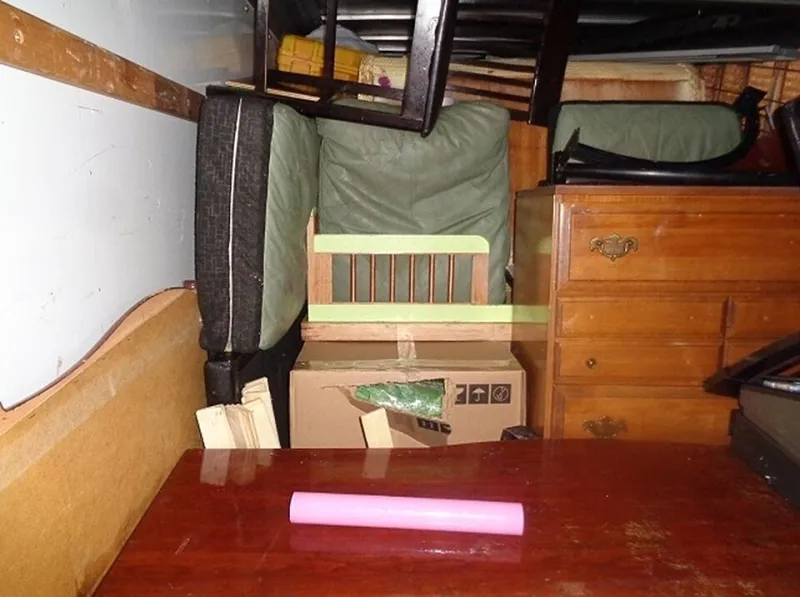
Photo: U.S. Customs and Border Protection, Public domain, via Wikimedia Commons
There's a moment, familiar to anyone who's been through a separation, when the emotional fog briefly lifts and you're left staring at a living room full of shared furniture wondering: right, whose is this, exactly?
In Brighton, where space is tight, rents are high, and most couples are either squeezed into a one-bed flat or stretched across a shared tenancy they can barely afford solo, that question gets complicated fast. The city's property market doesn't leave much room for sentimentality — or spare bedrooms.
What happens to the stuff? Where does one person go while the other stays? And how do you divide a life's worth of accumulated belongings when you've got two weeks' notice on a joint tenancy and nowhere obvious to put any of it?
These aren't abstract questions. According to local estate agents and storage operators, the period between January and March consistently sees a notable uptick in enquiries from people navigating exactly this scenario.
The Stuff Problem Nobody Talks About
When couples separate, the conversation tends to focus on the big-ticket items — the property itself, the finances, the children if there are any. But the sheer volume of things that accumulate in a shared home is something most people don't think about until they're standing in the middle of it.
Take a typical Brighton flat-share turned couple's home. You've got two people's worth of kitchen equipment, furniture that was bought together and belongs to neither and both of you simultaneously, boxes of books, a bike that doesn't fit in the hallway, and a wardrobe that was always too small for one person, let alone two.
One person needs to move out. But move out to where, exactly? Brighton's rental market isn't exactly flush with affordable short-term lets. And moving straight into a new place — even if you could find one quickly — means taking everything with you before you've had the headspace to figure out what you actually want.
This is where short-term storage has quietly become one of the more practical tools in the separation toolkit.
A Breathing Space for Belongings (and People)
Several Brighton storage providers report a steady stream of customers who describe themselves, with varying degrees of composure, as "going through a bit of a situation at home." The appeal is obvious: rather than making rushed decisions about what to keep, sell, or give away, a storage unit buys time.
One local woman — we'll call her Priya — found herself in exactly this position last year. After eight years together and a shared rental in Hove, she and her partner decided to separate. Neither could afford to stay in the flat alone.
"We had about six weeks to sort everything out," she says. "I moved into my sister's spare room temporarily, but I couldn't take much with me. Putting my things in storage meant I didn't have to make permanent decisions when I was an emotional wreck. I just needed somewhere safe for it all while I got my head together."
She kept the unit for four months in the end. By the time she moved into her new place, she'd had time to work out what she actually needed — and quietly donate the rest.
The Property Side: What Brighton Agents Are Seeing
For couples who own rather than rent, separation brings a different but equally thorny set of challenges. Brighton's property values mean there's often real money at stake in a jointly owned home, and deciding whether to sell, buy one partner out, or hold on while legal proceedings drag on can take months.
Local estate agents note that separating couples frequently approach them in a state of uncertainty — not quite ready to sell, not sure who's going to stay, and often still living under the same roof out of financial necessity rather than choice.
"It's more common than people think," says one Brighton-based agent who asked not to be named. "We see couples who are living in the same house but have essentially separated, waiting for a solicitor or a financial settlement to move things forward. The property is in limbo, and so are they."
In these situations, some couples are turning to mediation services to help navigate the practicalities — including who stays in the property during the process, how shared belongings are divided, and what happens to any storage or outbuildings attached to the home.
Splitting the Practical Stuff: A Loose Guide
If you're going through a separation and feeling overwhelmed by the logistics, you're not alone. A few things that Brighton residents and local professionals suggest:
Start with the essentials, not the sentimental. Work out what each person genuinely needs to function — clothes, work equipment, everyday items — before getting into the emotionally loaded stuff like wedding gifts or inherited furniture.
Don't make permanent decisions in a temporary state. A storage unit isn't a solution, but it's a useful pause button. Paying for a few months of storage is almost always cheaper than regretting a hasty decision to skip a piece of furniture that turns out to be irreplaceable.
Check your tenancy agreement early. If you're renting, your landlord needs to know what's happening. Some joint tenancies can be restructured; others require both parties to give notice. Finding this out early avoids a legal headache on top of everything else.
Keep a record of what goes where. It sounds tedious, but a simple list of who took what — even a photograph of the storage unit contents — can prevent disputes later on.
Get proper advice on shared property. If you own together, speak to a solicitor before making any agreements. Brighton's property values mean the financial stakes are significant, and informal arrangements can cause problems down the line.
The Quiet Demand Brighton's Storage Market Is Meeting
It would be easy to overlook this corner of the storage market — it's not the kind of thing people advertise, and it rarely comes up in polite conversation. But the reality is that relationship breakdowns are one of the most consistent drivers of short-term storage demand in cities like Brighton.
The city's demographics — a high proportion of renters, a significant number of people in their thirties and forties, and a property market that makes sudden moves expensive — mean that the gap between "we need to separate" and "we've both sorted somewhere new" is often longer than people expect.
Storage, in that gap, isn't just a practical convenience. It's a way of keeping options open, reducing the pressure to make decisions before you're ready, and giving yourself the physical space to start thinking about what comes next.
None of which makes the situation easier. But having somewhere safe to put the bookshelf while you work out the rest of it? That's at least one less thing to argue about.