The Exit Bill Nobody Warned You About: The Real Cost of Leaving a Brighton Commercial Lease

There's a particular kind of financial shock that Brighton business owners tend to describe in the same way: "I knew it would cost something, but I had no idea it would cost that." They're not talking about rent arrears or a sudden rate hike. They're talking about the bill that arrives when they try to leave.
In a city where commercial rents have climbed steadily and business confidence has wobbled in equal measure, more and more tenants are finding themselves trapped — not by a lack of options, but by the sheer expense of walking out the door.
Breaking a Lease Isn't Free. Not Even Close.
Most commercial leases in the UK come with break clauses — provisions that allow either party to exit the agreement at a specified point, usually on strict conditions. On paper, it sounds straightforward. In practice, it's a minefield.
Break clause conditions in commercial leases can require tenants to have paid all rent in full, with no outstanding service charges, no breaches of covenant, and in some cases, vacant possession of the entire premises. Miss a single condition — even a minor one — and the break clause can be invalidated entirely, leaving you locked in for the remainder of the term.
For Brighton businesses already operating on thin margins, that's not a technicality. That's a trap.
And that's before you get to the solicitors' fees. Negotiating an early exit — or even just confirming whether a break clause has been correctly exercised — typically requires specialist commercial property legal advice. In Brighton, that can run anywhere from £1,500 to well upwards of £5,000 depending on the complexity of the lease and how cooperative (or otherwise) the landlord decides to be.
Dilapidations: The Bill That Arrives After You've Already Left
If break clause conditions are the first hurdle, dilapidations are the one that catches people completely off guard.
At the end of a commercial tenancy, landlords have the right to claim for the cost of returning the property to the condition it was in at the start of the lease — as defined by the schedule of condition, assuming one was ever drawn up. Many aren't. And when there's no baseline record, disputes become expensive very quickly.
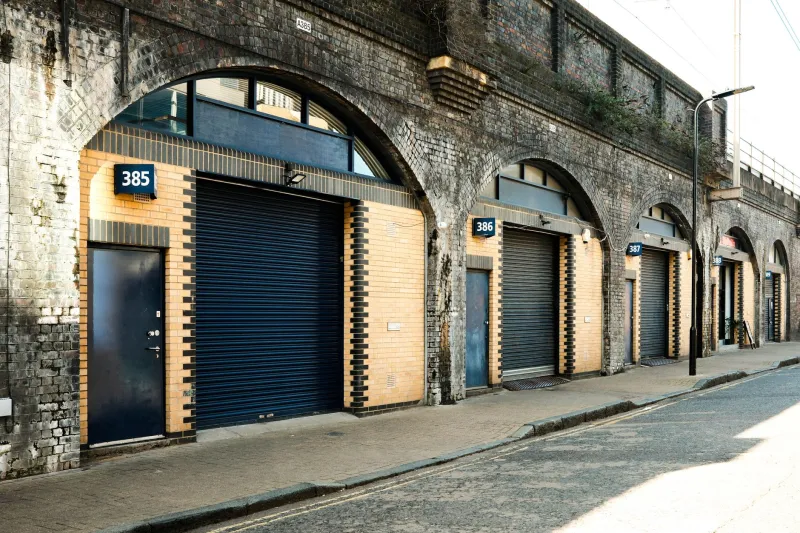
In Brighton's older commercial stock — the Victorian terraces on London Road, the converted arches near the seafront, the slightly-tired retail units along Western Road — buildings rarely improve with age, and landlords sometimes use dilapidations claims as a way to fund refurbishments they'd have had to pay for regardless. Claims of £10,000 to £30,000 are not unusual for medium-sized units. Some tenants report receiving schedules that bear almost no resemblance to the actual condition they left the property in.
The cruel irony is that fighting a dilapidations claim also costs money. A surveyor's report to counter an inflated schedule can run to several thousand pounds. Most business owners, already financially stretched by the process of closing or relocating, simply don't have the stomach — or the cash — for a prolonged dispute.
When Aggression Backfires
Here's the thing that's puzzling about Brighton's current commercial property landscape: some of the landlords most aggressively enforcing exit penalties are the same ones sitting on properties that have been vacant for six, twelve, eighteen months.
The logic of squeezing a departing tenant to the last penny makes sense in a market where replacement tenants are queuing at the door. In Brighton right now, that market doesn't really exist — not for every property type, and not in every location. When a landlord forces a struggling business to haemorrhage cash on the way out, that business doesn't quietly disappear. It talks. Word spreads through Brighton's tight-knit business community faster than any letting agent's circular, and suddenly that unit has a reputation before it's even been re-listed.
More significantly, businesses pushed to the financial brink by exit costs don't just relocate — they close. And a closed business is a lost tenant, a lost reference, and a lost relationship. Several Brighton landlords are reportedly beginning to recognise this, particularly those managing larger portfolios where a wave of simultaneous exits has left them with a cash flow problem of their own.
What the Savvier Operators Are Actually Doing
The businesses navigating this most successfully tend to have one thing in common: they started planning their exit long before they actually needed one.
Negotiating a surrender — a mutual agreement between landlord and tenant to end the lease early — is almost always cheaper and cleaner than exercising a break clause unilaterally. Landlords who are realistic about the current market can often be persuaded to accept a negotiated settlement, particularly if the alternative is a protracted dispute or a prolonged vacant period. Some Brighton tenants have managed to exit leases with a single lump-sum payment significantly below the theoretical liability, simply by approaching the conversation early and constructively.
Others are getting creative with the space itself. Subletting — where the lease permits it — allows a business to offset its rental liability while it winds down or transitions. Licence agreements and desk-sharing arrangements in co-working-friendly spaces have become a useful pressure valve for businesses that need to reduce their footprint without triggering a formal lease event.
And then there's the storage question. One of the less obvious costs of a commercial exit is the scramble to deal with stock, equipment, and fixtures at short notice. Businesses that have a storage plan in place — whether that's a unit near the city centre or a shared facility on the outskirts — find the transition significantly less chaotic, and significantly less expensive, than those who end up making panicked decisions about what to keep and what to skip.
The Bigger Picture
Brighton's commercial property market has always had a slightly pressurised quality — too many businesses chasing too little affordable space, with a seasonal economy that makes long-term planning genuinely difficult. The exit cost problem is, in many ways, a symptom of lease structures designed for a different era, when tenants were more stable, turnovers were more predictable, and landlords held most of the cards.
The cards are being reshuffled. Businesses that understand the full cost of their lease — not just the monthly rent, but the cost of staying, the cost of flexibility, and yes, the cost of leaving — are the ones making smarter decisions about where they put down roots in the first place.
If you're currently in a commercial lease in Brighton and starting to feel the walls closing in, the worst thing you can do is wait. Get legal advice early. Understand your break clause conditions inside out. And start thinking about what a managed, planned exit might look like — before the decision gets made for you.