Signed, Sealed, and Stuck: How Brighton's Food Entrepreneurs Got Trapped by Leases They Don't Need
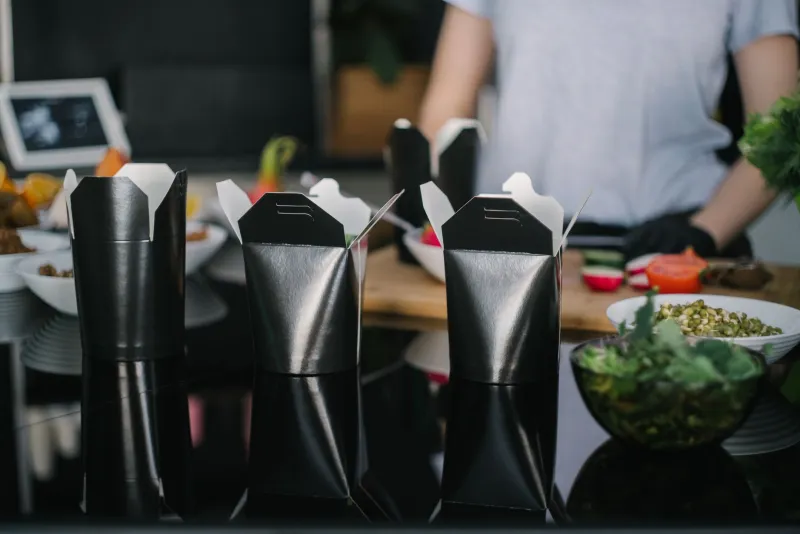
The smell of a commercial kitchen is hard to fake. The industrial hobs, the extraction fans, the walk-in fridge humming in the corner — there's a particular atmosphere to a properly kitted-out food preparation space that makes everything feel serious. Like you've arrived. Like the business is real.
For a lot of Brighton's food entrepreneurs, signing a lease on that kind of space felt like exactly that: a statement of intent. A commitment. The moment the side hustle became something more.
For quite a few of them, it turned out to be something else entirely.
The Delivery-First Trap
The rise of delivery-only food businesses — ghost kitchens, dark kitchens, whatever you want to call them — accelerated sharply during the pandemic and hasn't really slowed down since. Brighton, with its dense population, strong appetite for independent food businesses, and reliable delivery app coverage, proved fertile ground.
The premise is appealing: skip the front-of-house costs, the waiting staff, the rates on a high-street unit. Cook. Package. Send. The margins, in theory, should be better than a traditional restaurant. The overheads, lower.
The problem is that many of the people who built this kind of business in Brighton did so by signing leases on commercial kitchen space — sometimes shared, sometimes dedicated — without fully modelling what their actual usage would look like once they were operational.
"I thought I'd be in there every day," said one Brighton-based chilli sauce producer who asked not to be named. "I was doing maybe six hours a week. The rest of the time it was just sitting there. But I was still paying for it every month."
This is the ghost rent problem. The space exists. The lease is real. The payments are going out. But the business doesn't need the physical footprint it's committed to.
How the Contracts Catch You Out
Commercial leases are not consumer contracts. There's no cooling-off period. No right to exit if your circumstances change. The protections that residential tenants in England and Wales can lean on simply don't apply in the same way.
For a small food business operator who signed a three-year lease on a commercial kitchen unit in, say, a Hove industrial estate, the options when things aren't working are limited and largely unpleasant. You can try to sublet — if the lease permits it, which many don't without landlord consent. You can attempt to negotiate an early exit, which usually involves paying a break fee or surrendering your deposit. Or you can keep paying and hope the business model eventually catches up with the space.
The lease terms that small food businesses tend to sign are often inherited from a commercial property market designed for restaurants, food manufacturers, and catering companies with predictable, high-volume usage. They assume the tenant will be there, using the space, generating revenue. They're not built for a business that operates two days a week and fulfils orders from a domestic kitchen the rest of the time.
Insurance adds another layer of complexity. Commercial kitchen insurance typically requires the space to be used regularly and maintained to certain standards. If a unit is sitting largely empty, operators can find themselves in a grey zone — paying for insurance on a space they're not using, while being uncertain whether a claim would even be valid if something went wrong during a period of low activity.
The Shared Kitchen Alternative (And Why It Didn't Save Everyone)
Before the lease-signing boom, Brighton had a small but functioning ecosystem of shared commercial kitchen spaces — facilities where multiple food businesses could book time by the hour or day, splitting the overhead costs of the equipment and the space.
For the kind of low-volume, delivery-focused operator we're talking about, this model is arguably far better suited to their actual needs. Pay for what you use. Scale up or down depending on demand. Walk away when the business changes direction.
But shared kitchen capacity in Brighton is limited, and during the peak of the delivery food boom, availability was tight. Some operators who would have preferred a shared arrangement ended up signing dedicated leases simply because they couldn't get reliable access to shared time. Others were persuaded — sometimes by landlords, sometimes by their own ambition — that having their own dedicated space was worth the additional cost.
For those who ended up with more space than they needed, the shared kitchen option they bypassed now looks considerably more attractive in retrospect.
The Financial Bleed
Let's put some rough numbers on this. A modest commercial kitchen unit in Brighton — not prime city centre, but accessible, with decent equipment — might run to £800 to £1,500 per month depending on size, location, and what's included. Over a three-year lease, that's between £28,800 and £54,000 before rates, utilities, and insurance.
For a food business generating £2,000 to £4,000 a month in revenue — which is a reasonable range for a small delivery-only operation or a catering enterprise in its early years — that rent burden is substantial. If the space is being used at 30% capacity, the effective cost per hour of actual kitchen time can quickly become eye-watering.
The businesses that are surviving this squeeze are generally the ones that have found ways to offset the cost — subletting kitchen time to other operators, using the space for food photography and content creation, pivoting to wholesale production, or simply grinding through the lease and building volume. But not everyone has the energy or the resources to do any of those things.
Is the Commercial Lease Broken for Modern Food Businesses?
The honest answer is: it was never really designed for them.
The traditional commercial lease evolved to serve businesses with stable, predictable physical footprints. A restaurant that opens six days a week. A food manufacturer running a production line. A catering company with a full calendar of events. These businesses can absorb a long-term lease because they know they'll be using the space.
The modern food entrepreneur — building a brand on Instagram, fulfilling orders through Deliveroo, catering one wedding a month — has a completely different relationship with physical space. They need flexibility, not commitment. Access, not ownership. The ability to scale without being punished for it.
Some commercial landlords in Brighton are beginning to respond to this. Shorter initial terms. Break clauses at twelve months. More openness to subletting arrangements. These aren't universal, but they're becoming more common as the landlord community realises that the alternative — empty units and tenants who can't pay — isn't much better.
For the operators already stuck in longer commitments, those changes don't offer much immediate comfort. But for the next wave of Brighton food entrepreneurs eyeing up that gleaming commercial kitchen and thinking about signing on the dotted line, the lesson is fairly clear: make sure the space fits the business you actually have, not the one you're hoping to build.
Exploring commercial space options in Brighton that won't lock you into more than you need? The Brighton Storeroom lists flexible commercial and storage units across the city — including short-term options suited to food businesses and independent operators.