Paying for Empty Corridors: The Brighton Businesses Renting More Than They'll Ever Fill
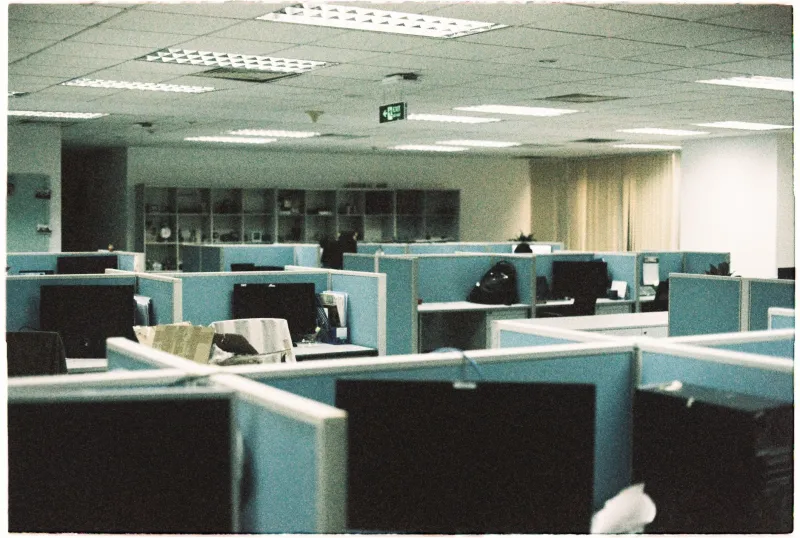
Walk through the North Laine on a Tuesday morning and you'll spot them — ground-floor units with half the lights off, rooms that echo a little too much, storage areas doubling as makeshift meeting spaces because nobody's quite sure what else to do with them. Brighton's small businesses have a new habit, and it's an expensive one: renting significantly more space than they actually need.
It sounds counterintuitive. In a city where commercial rents have climbed steadily and the competition for decent premises is fierce, why would a small business owner voluntarily take on extra square footage — and the extra costs that come with it? The answer, it turns out, is more complicated than simple miscalculation.
The Logic Behind the Overspend
Talk to enough Brighton business owners and a pattern emerges. Many of them watched colleagues get priced out or squeezed out when they needed to expand, and they're determined not to repeat the mistake. "I took on more than I needed because I knew what would happen if I didn't," says one independent retailer operating near the seafront, who asked not to be named. "The moment you need to upsize in this city, you're in trouble. There's nothing available, and what is available costs a fortune."
This kind of defensive leasing — taking on space today to avoid the scramble tomorrow — has become a recognisable strategy among Brighton's small business community. It's particularly common among businesses in their second or third year of trading, past the initial survival phase but not yet established enough to feel secure. They're hedging against a market that's shown little mercy to those caught short.
There's also the lease structure itself to consider. Commercial leases in the UK typically run for three, five, or even ten years, with break clauses that aren't always easy to exercise. Locking in a larger unit now, at today's rate, can look like a sensible long-term play — especially if local rents continue rising. From that angle, the empty corridor isn't wasted space; it's a kind of insurance.
What It's Costing Them
Insurance doesn't come cheap. The average cost of commercial floor space in Brighton varies considerably by location and use class, but businesses operating in prime retail or office zones can easily find themselves paying for square footage that sits dormant month after month. When you factor in service charges, business rates, and utilities, the bill for unused space can run to several hundred pounds a month — sometimes more.
For businesses operating on tight margins, that's not a trivial sum. Yet many of the owners we spoke to described the expenditure as a kind of peace of mind. "It's not ideal," admitted one creative agency owner based near the station. "But I'd rather be paying for space I'm not using than losing a client because I can't take on another member of staff."
The psychological dimension here is worth acknowledging. Brighton's commercial property market has, over the past several years, delivered enough bad news — sudden rent hikes, landlords selling up, short-term leases not renewed — that many business owners are operating from a place of low-level anxiety. Over-renting is, in part, a response to that anxiety. It's a way of buying certainty in a market that's offered very little.
The Knock-On Effect
This trend doesn't exist in isolation. When businesses occupy more space than they actively use, that space is effectively removed from the pool of available commercial property. For Brighton's smallest operators — the sole traders, the early-stage start-ups, the part-time businesses looking for a single room or a compact studio — the knock-on effect is significant. Supply tightens. Prices edge upward. The cycle reinforces itself.
There's also a subtler impact on neighbourhood character. Commercial streets that might otherwise host a diverse mix of small tenants end up with fewer, larger occupants — some of whom are rattling around in premises twice the size they need. The visible result can be a kind of spatial underuse that sits oddly against Brighton's reputation as a city bursting with creative and entrepreneurial energy.
Property agents working the Brighton commercial market have noticed the shift. One described a noticeable increase in enquiries for units "with room to grow," even from businesses that candidly acknowledge they're years away from needing the extra capacity. "People aren't just looking at what they need now," they told us. "They're thinking three years ahead, five years ahead. That's changed quite a bit."
Is There a Smarter Way?
For businesses caught between the desire to future-proof and the reality of monthly overheads, there are alternatives worth considering. Flexible commercial leases — shorter terms, easier break clauses — have become more available in some parts of Brighton, particularly in managed workspace environments. Some business owners are also exploring whether excess space can be sublet, though commercial leases often include restrictions that make this complicated without landlord consent.
Shared commercial arrangements, where two or more businesses split a larger unit, are another option gaining traction. It requires a degree of coordination and trust, but it allows each party to access more space than they could afford independently while keeping individual costs manageable.
Storage solutions also play a role here. Some businesses are realising that a portion of what they're paying premium commercial rent for is actually just overflow stock or archived materials — things that could be housed far more cheaply in a dedicated storage unit elsewhere in the city. Freeing up that commercial space, even within an existing lease, can make the footprint feel less wasteful.
What It Reveals About Business Confidence
Perhaps the most telling thing about this over-renting trend is what it says about how Brighton's small business owners feel about the future. Optimism and anxiety are running in parallel. These are businesses that believe in their own growth — otherwise, why bother taking on the extra space? But they're also businesses that have learned not to trust the market to reward them when they need it to.
That's a complicated emotional position to be operating from, and it's one that the commercial property sector in Brighton would do well to take seriously. A market that consistently fails to offer flexible, affordable, right-sized options is a market that pushes its tenants into defensive behaviours — and empty corridors are just one of the more visible symptoms.